
CPP’s Last Stand
March 16, 2017:
The Obama Administration’s so called war on coal, a campaign that appeared destined for victory just a few months ago looks to be in full retreat. An executive order, expected soon, will start a re-examination of costly and potentially unlawful policy impediments to energy independence.
Prominent among these will be two, both designed to keep the world’s largest coal reserves in the ground. The Clean Power Plan threatened many of the remaining coal power plants; the moratorium slapped on new federal coal leases that would impact the largest source of the nation’s coal production.
The executive order not only marks the beginning of the end to a determined effort to drive coal out of the country. It also dramatizes the perils of regulatory overreach. The Clean Power Plan was launched with great fanfare but little support by an administration that shunned alliances with Congress and the states, refused negotiations and compromises and instead invented legal authority to support the plan.
A Prussian general famously said that no plan survives contact with the enemy. The Clean Power Plan shouldn’t either. Its first big setback came a year ago when the Supreme Court stayed the rule until all litigation was settled. It lost further ground and much credibility when more than half the states rebelled against it and more than half the members of Congress voted to stop it. The November election likely marked its Waterloo.
In this war as in others, truth was the first casualty. And one deception stands out: the insistence that coal’s real enemy was cheap natural gas, not regulations. The tens of thousands of lost jobs and the broken communities were just unfortunate casualties of market competition we were told. C’est la guerre.
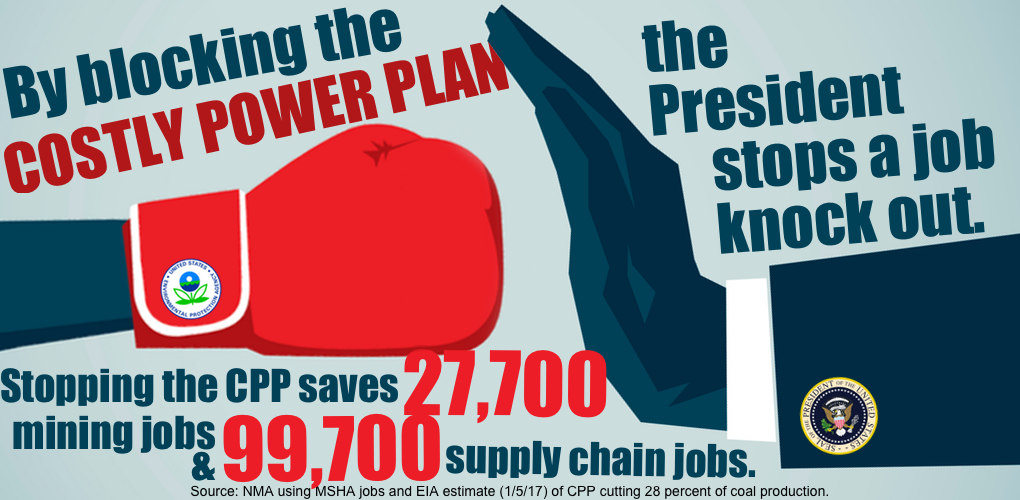
But data from the Energy Information Agency (EIA) recently laid bare the costs of these rules. Without the Clean Power Plan, said EIA, U.S. coal would stabilize production at current rates. Otherwise, the Plan would force 53,000 megawatts of coal capacity into retirement, sending production plummeting by 28 percent. The coal to serve that lost capacity – about 240 million tons/year – would also be lost, and with it about 27,700 high wage jobs directly and another 99,849 throughout the supply chain, based on standard multipliers.
Truth fared no better in the lame justifications offered for the federal coal lease moratorium. Climate change impacts? The Powder River Basin’s annual coal production is only 4.7 percent of the world’s total – not enough to measure let alone impact global temperatures. Taxpayers cheated by federal coal operators? Norwest Corp. found these miners send the government 39 cents of every dollar earned from federal coal lease sales. Meanwhile, we never heard about the 55,000 jobs supported by these sales – jobs that could be at risk just to satisfy the climate cult.
There are sensible ways to address environmental problems without jeopardizing U.S. energy independence. The Clean Power Plan and the federal coal moratorium aren’t among them.
- On March 16, 2017