
Surging Natural Gas Prices Underscore the Need for Fuel Diversity
Consumers are finally getting some relief at the gas pump but the prices for natural gas and electricity are now soaring. As the economy treads water, fighting off recession, a new variant of energy-driven inflation is knocking at the door.
With the U.S. now the world’s largest LNG exporter, and the U.S. gas market increasingly linked to buyers in Asia and energy-desperate Europe, U.S. policymakers must grapple with a new, far more expensive energy reality.
U.S. natural gas prices spiked to a 14-year high on Tuesday nearly hitting $10 per million British thermal units (MMBtu). The price of natural gas has jumped 66% just this month. The shale gas glut that saw gas hovering under $2/ MMBtu as recently as the fall of 2020 is a distant memory. With the U.S. gas market now tied to buyers across the world, higher prices and volatility appear here to stay. For U.S. consumers, that means pain.
Soaring Power Prices
Electricity prices in many states are linked directly to the price of natural gas – often the dominant fuel for electricity generation. As a result, startling rate increases are colliding with peak power demand to keep ACs running. In Texas, consumers are regularly paying 50% more for power this summer than they did last. “I am worried people are going to be shocked,” John Ballenger, vice president at Texas retail electric provider Champion Energy, toldThe Texas Tribune. “Realizing this is 50 or 60 or 70% higher than what they had paid before, I’m just not sure it’s real to people yet. If it’s not, it will be very, very soon when the bills hit this summer.”
Across the country, the story is painfully similar. In New Hampshire, one of the state’s major utilities is poised to double the price of electricity in August. In a recent filing with the Public Utilities Commission, Liberty Utilities proposed increasing the per kilowatt hour price of electricity from 11.11 cents to 22.23 cents starting in July. Of even greater concern is what soaring natural gas prices will mean for heating costs this winter. The nation’s energy crisis – arguably the key driver for inflation – could get far worse before it gets better.
Keep the Coal Fleet Available
For the first time in decades, for many Americans, there will be no alternative to soaring natural gas prices. As The Wall Street Journal recently observed, “In the past, coal kept a lid on summer gas demand and prices. If gas prices rose too high, utilities would turn to their coal plants. The U.S. power sector has retired about a third of its coal-fired generating capacity since 2010, though, which means that switching is no longer an option for some.”
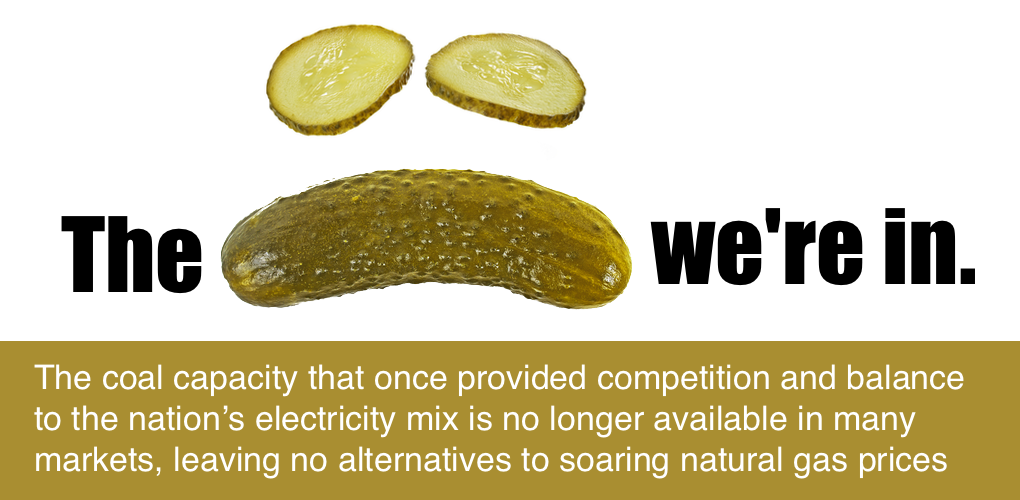
In short, the coal capacity that once provided competition and balance to the nation’s electricity mix is no longer available in many markets. And in states where it still is available, soaring natural gas prices have created demand for coal that a constrained coal supply chain is struggling to address. A more than decade long policy and regulatory effort to disassemble the coal industry and build a natural gas-dominant bridge to the energy future has left U.S. consumers and the U.S. economy painfully vulnerable to gas price spikes.
There’s no quick fix to this pickle. There’s hope domestic gas production will respond to higher prices but demand from home and overseas is outpacing new supply. Significant additions of renewable sources of power that can potentially reduce fuel demand remain years away – facing their own supply chain and siting challenges – and, even once connected to the grid, they won’t alleviate the need for robust dispatchable capacity.
As Europe has found out the hard way, there is no replacement for dispatchable fuel diversity. The answer – at least one that can stop this affordability crisis from getting far worse – is to maintain the dispatchable fuel diversity that is still available on the U.S. grid. Consumers need the balance provided by the coal fleet. Pursuing a regulatory agenda or fuel mix mandate – as the U.S. Environmental Protection Agency and some states are doing – is a policy path that was irresponsible before the surge in natural gas prices and is likely economically catastrophic now.
As power prices soar, regulators, policymakers and utilities must pivot to energy pragmatism and recognize the coal fleet as an invaluable affordability hedge – a price shock absorber – we must not needlessly and irresponsibly push aside.
- On July 27, 2022